
Cenizo (Texas sage)
Silver foliage and surprise blooms a day or two after rain. Hates wet feet, so give it drainage.
- Type
- Shrub
- Size
- 4–6 ft
- Light
- Full sun
- Bloom
- Purple, after summer rains
- Water
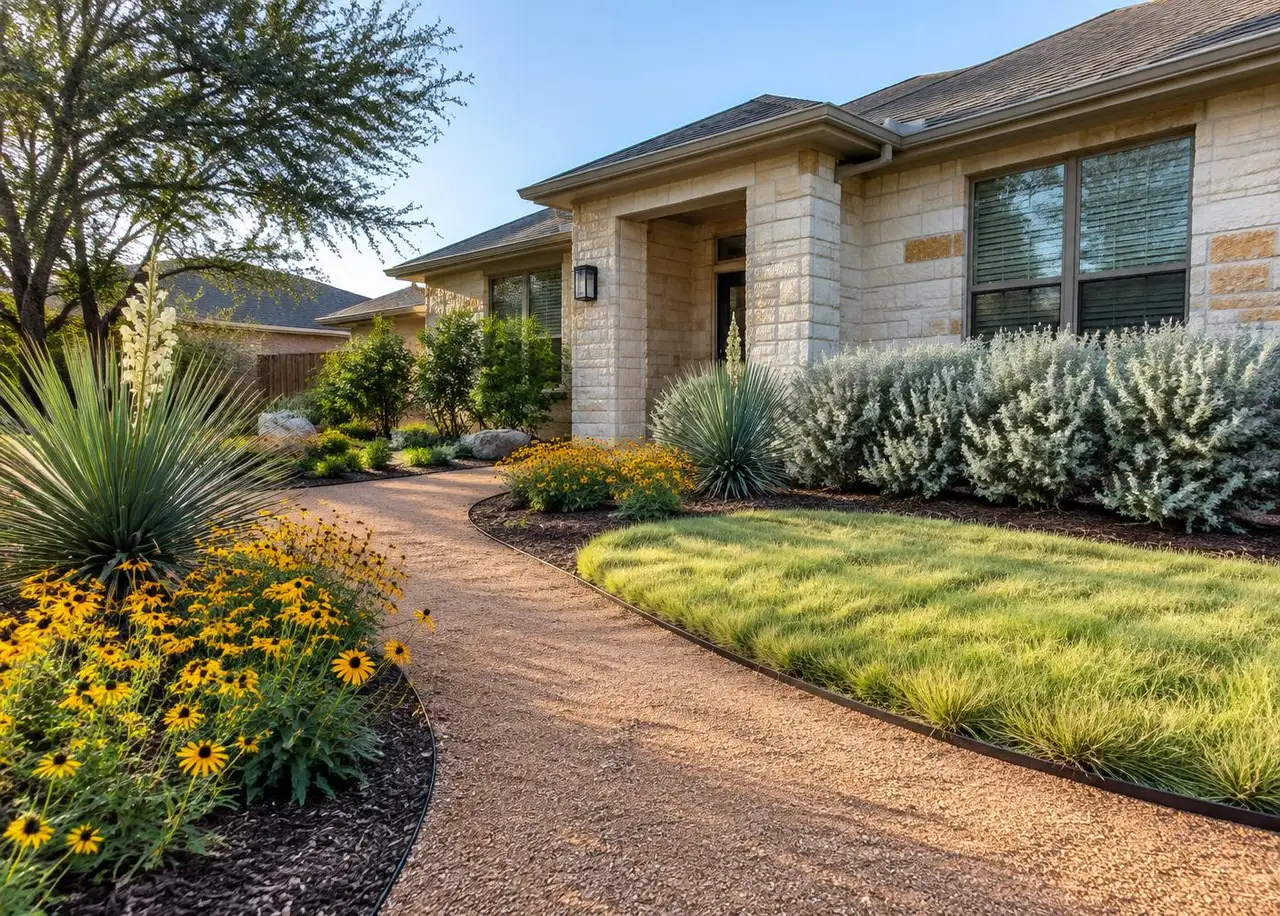
26 plants we trust in Killeen-area gardens: what they need, how big they get, and where they work best. Filter by light or by what you want from your garden.
Showing 26 plants. Water: very low · low · moderate, once established.
Silver foliage and surprise blooms a day or two after rain. Hates wet feet, so give it drainage.
A hummingbird magnet. Shear lightly in late winter to keep it full.
Queen butterflies swarm it in fall. Spreads politely by roots.
Thrives in rocky, poor soil. Overwatering is the only way to kill it.
A big, blue-green fountain of a grass. Great as a soft screen or a single specimen.
The pink cloud you see in fall. Plant in groups of three or more for impact.
The backbone of a Texas prairie. Turns bronze and holds its shape through winter.
One of the few natives that blooms reliably in shade. Hummingbirds love it.
Tough, airy and covered in tubular flowers. Cut to a foot tall in late winter.
Dangling seed heads that rattle in the wind. Can reseed, so place it where that's welcome.
Leave the seed heads for goldfinches. Deer may nibble it.
Easy from seed and very drought tolerant. Great in meadow plantings.
Cheerful and quick to fill gaps in a new bed. Short-lived but reseeds.
Fragrant, evergreen and tidy. Perfect along a hot driveway edge.
The native lantana. Butterflies all season. Berries are toxic, so skip it near curious toddlers.
Blooms through the worst of the heat. Cut back hard in late winter.
Not a true yucca, no sharp tips. Deer sometimes eat the flower stalks.
A Central Texas native with wavy leaves. Small enough for front beds.
Fragrant white flowers before the leaves. Small plums for birds in late summer.
Glossy, heat-tolerant leaves and a wave of spring color. Ideal near a patio.
The classic tough Texas shade tree. Handles clay, drought and heat.
Red to orange fall color, which is rare in Central Texas. Thrives over limestone.
Clusters of violet berries that mockingbirds and cardinals strip by December.
A walkable flowering groundcover. Host plant for several small butterflies.
Fills in shady spots where grass gives up. Takes light foot traffic.
A native lawn grass that goes dormant in drought instead of dying. Mow rarely, or never.
No plants match that search. Try a different word or clear the filter.
These are still sold in many garden centers, but they spread into creeks, parks and woodlands around Bell County and crowd out native plants. If you have them, we're happy to suggest a native swap.
Ask about replacements| Plant | Why we skip it |
|---|---|
| Nandina Nandina domestica | Escapes into woodlands; berries are toxic to birds. |
| Chinese privet / ligustrum Ligustrum sinense, L. lucidum | Forms dense thickets along creeks. |
| Chinese tallow Triadica sebifera | One of the most invasive trees in Texas. |
| Giant reed Arundo donax | Chokes stream banks and spreads by root fragments. |
| Japanese honeysuckle Lonicera japonica | Smothers native shrubs and young trees. |
| Vitex (in creek areas) Vitex agnus-castus | Reseeds aggressively near water. We use native alternatives. |
October and November give roots months of growth before the first 100°F day. Early spring is the second-best window.
Soak new plants two or three times a week for the first month, then taper. Shallow daily watering keeps roots near the surface.
Most natives prefer lean, well-drained soil. Heavy compost can make Texas sage and blackfoot daisy floppy or short-lived.
Two to three inches of shredded hardwood around plants, kept off stems. Leave a few bare sunny patches for ground-nesting bees.
Plant information is general guidance for the Killeen area (USDA zone 8a/8b). Sizes and performance vary with soil, exposure and weather.
A site visit takes about an hour and you leave with a starter plant list written for your sun and soil.