
01
Garden design plans
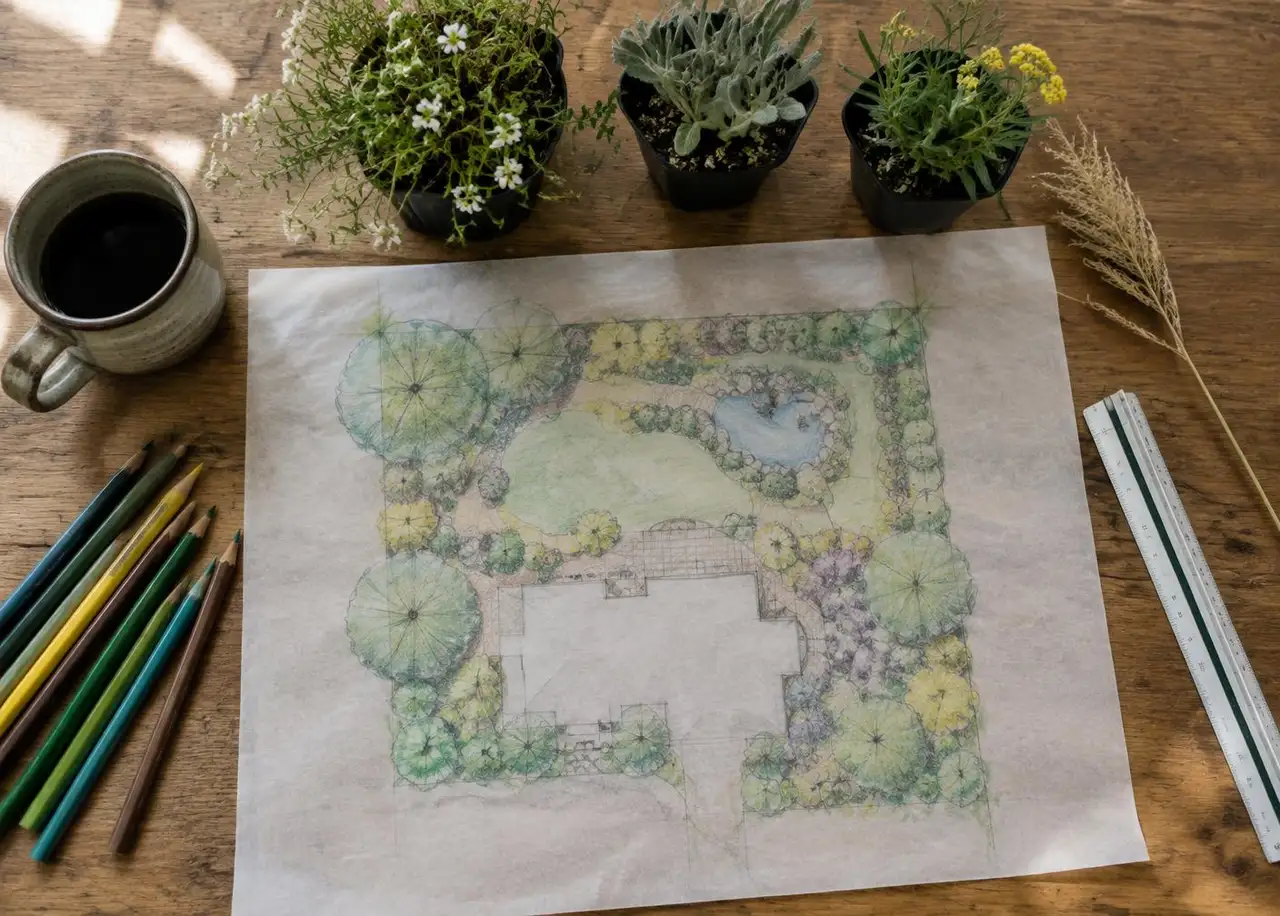
A scaled planting plan drawn for your lot, your sun and your soil, with a plant list you can install yourself or hand to us.
From $650
Details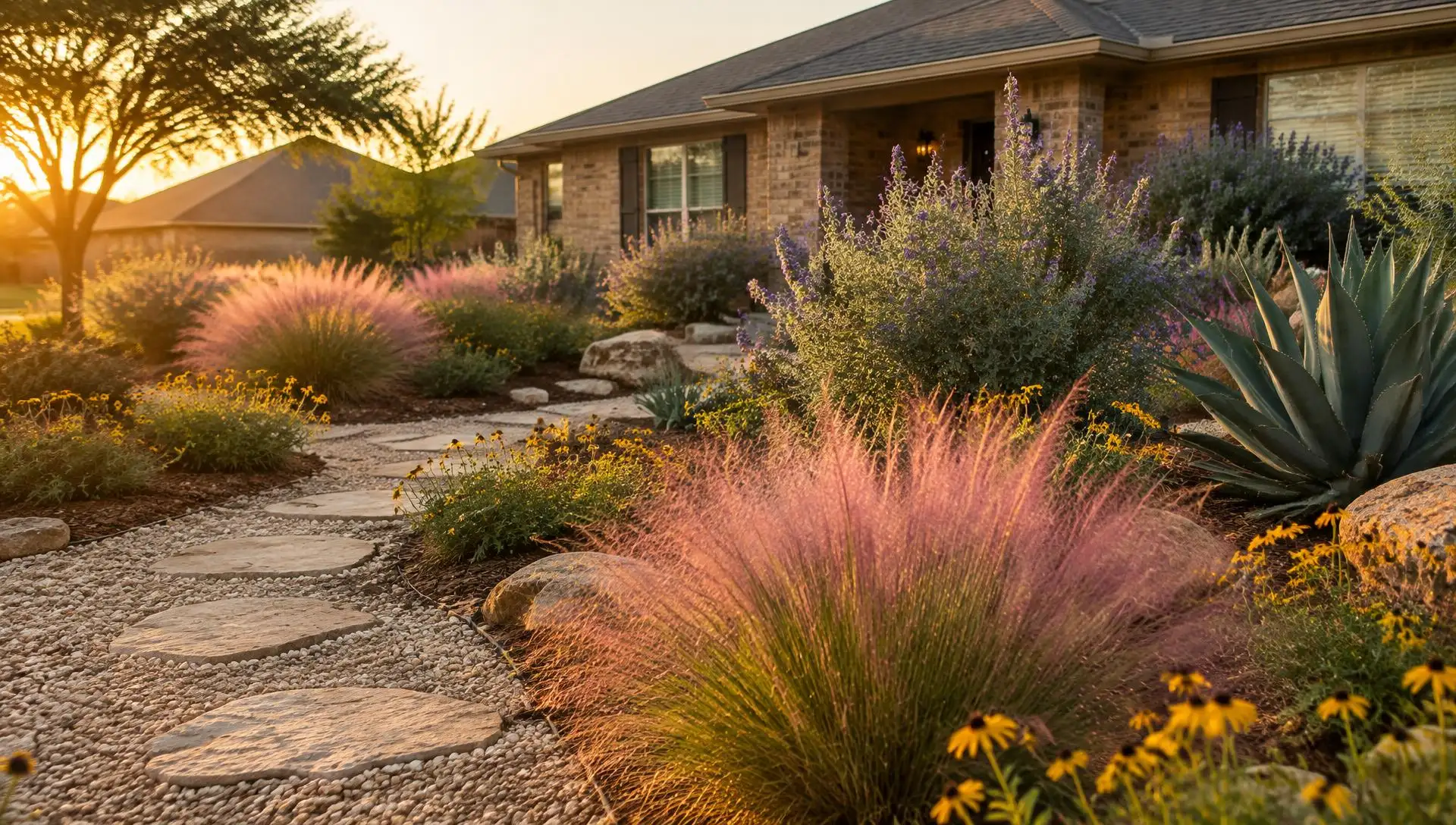
Mahamai designs, plants and cares for native gardens across Bell and Coryell County. Landscapes that handle August heat, shallow limestone soil and summer watering limits, and still look good from the curb.
Most yards around Killeen were built for St. Augustine grass, which spends every August asking for water it can't have. Plants that evolved here don't ask.
Every project starts with a site visit. From there you can take a plan and run with it, or have us handle planting and care from start to finish.
A scaled planting plan drawn for your lot, your sun and your soil, with a plant list you can install yourself or hand to us.
From $650
Details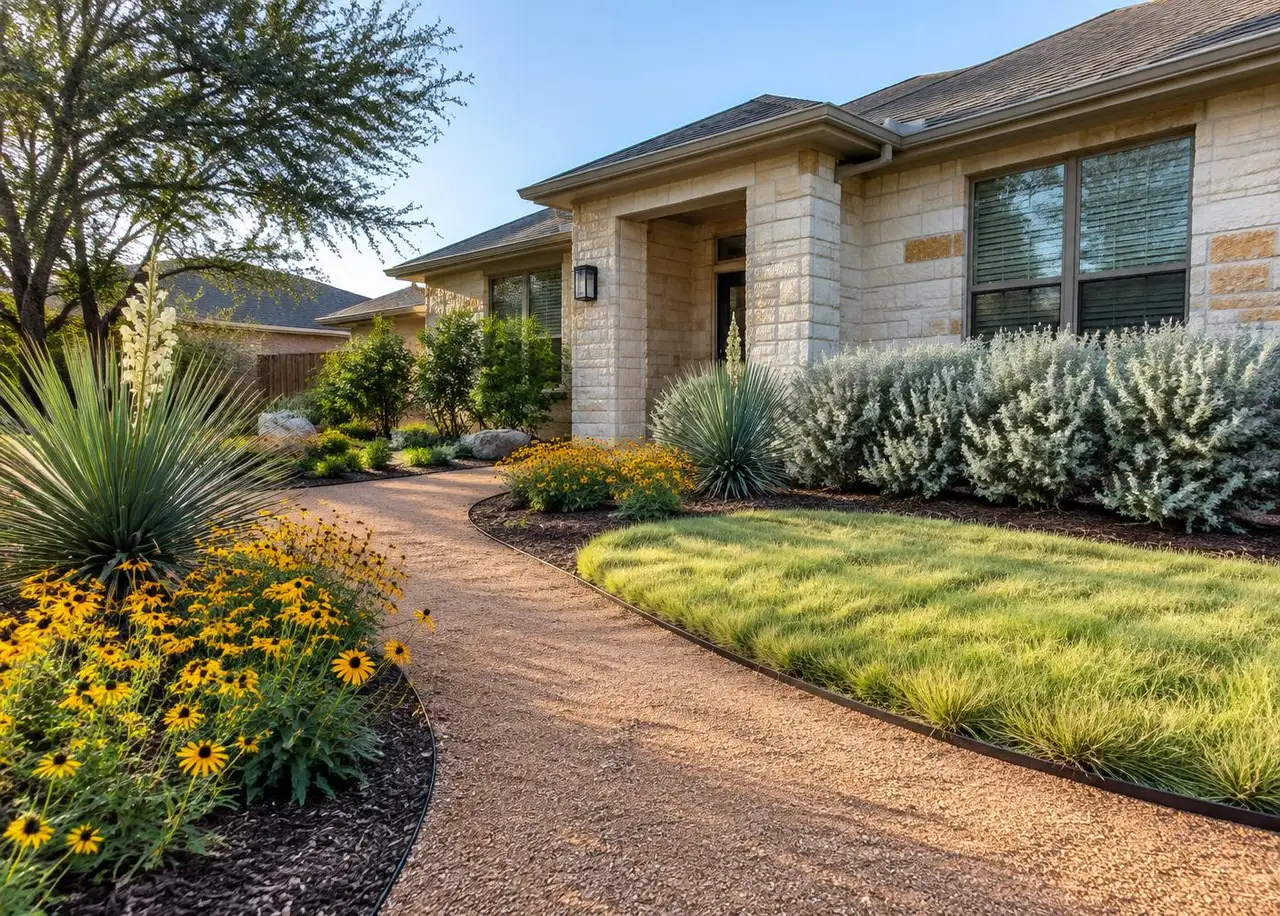
We remove tired turf, amend where it matters, and replace it with layered native beds and small, useful patches of buffalograss.
Quoted per project
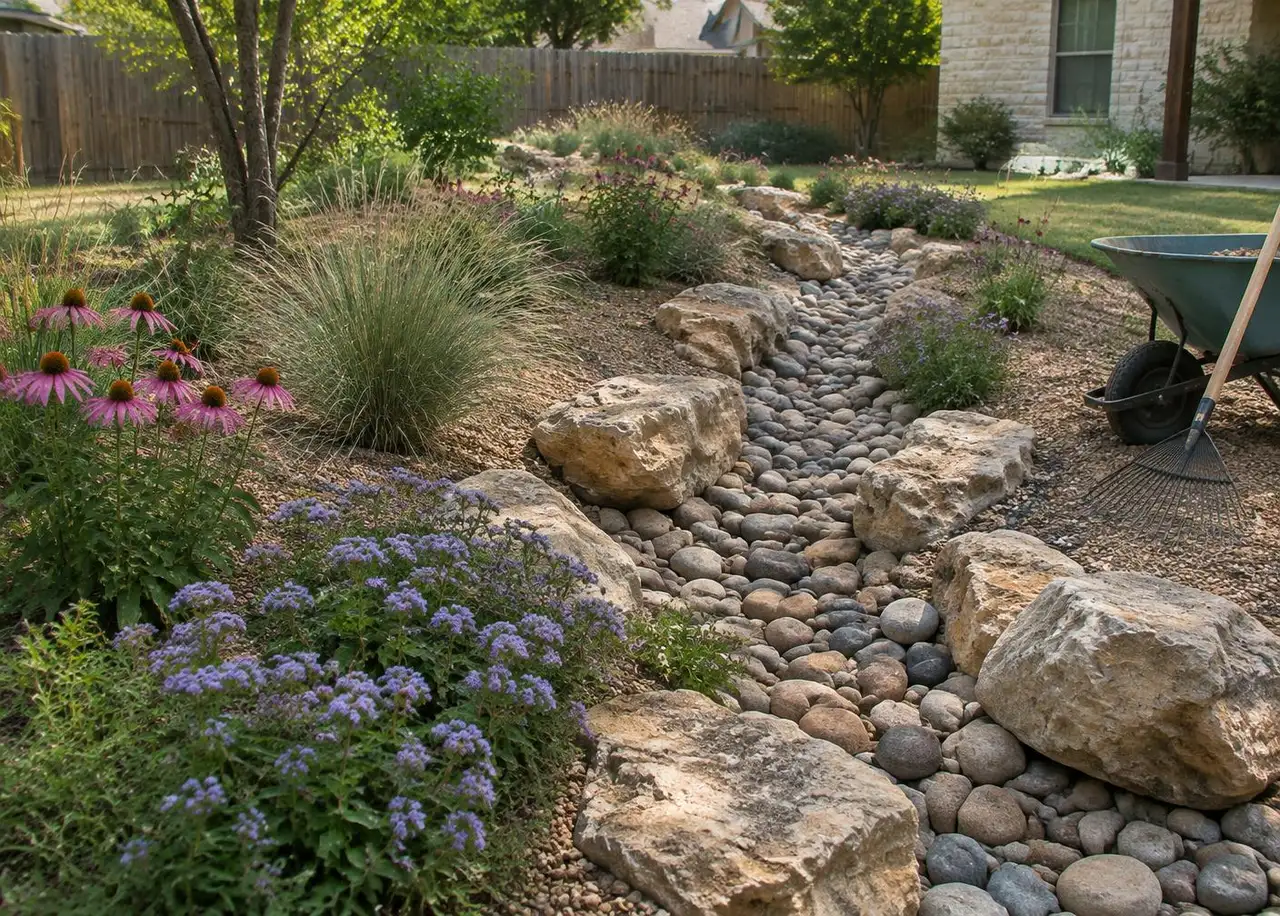
DetailsLimestone and river rock channels that move storm runoff away from your foundation and look good when it is dry.
Quoted per project
Details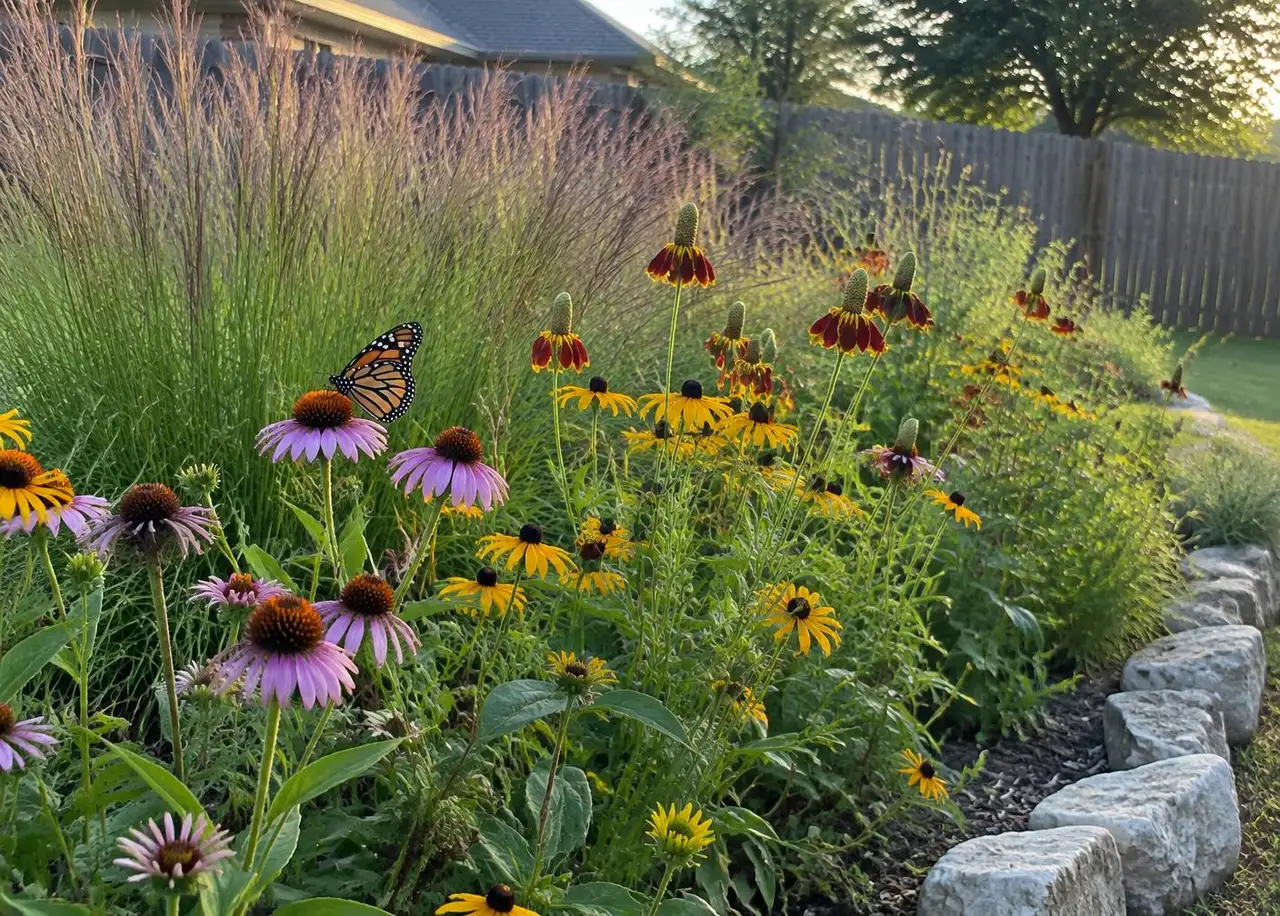
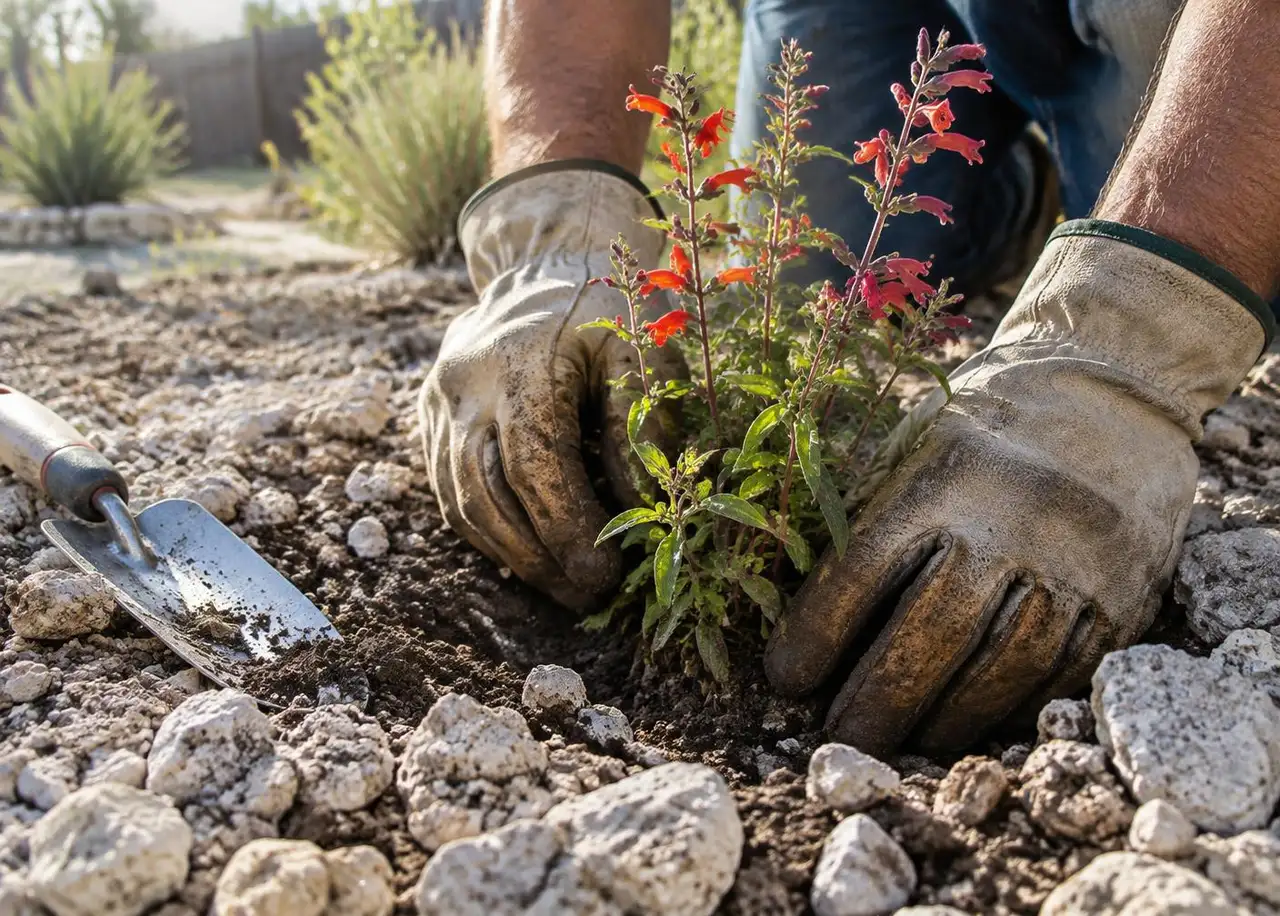
Nectar plants, host plants and bunch grasses chosen for monarchs, native bees and the birds that move through Bell County.
Quoted per project
Details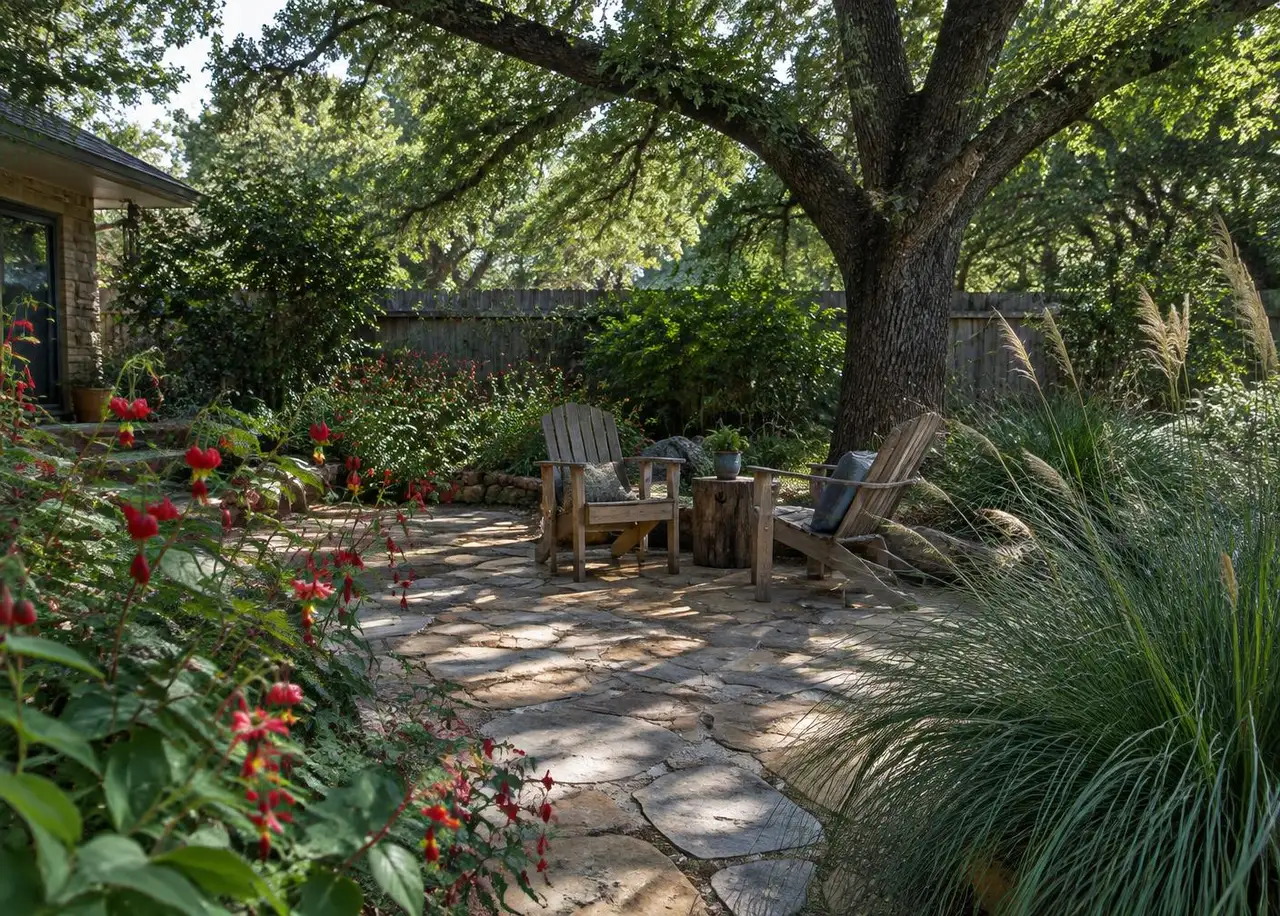
For the yard under a big cedar elm where nothing seems to grow. Turk's cap, inland sea oats and flagstone that stays cool.
Quoted per project
DetailsCut-backs, mulching, weeding and a walk-through every visit, so the first year goes well and the garden matures the way it should.
From $135 / visit
DetailsA typical front-yard project takes four to eight weeks from site visit to planting, timed around the spring and fall planting windows.
We spend about an hour on site checking sun, drainage, soil depth and how you actually use the space. You'll get notes and a rough plant palette by email.
A scaled planting plan with plant counts, sizes and a phased budget. Two rounds of revisions are included, and HOA-ready sheets if you need them.
Turf removal, bed prep, stone work and planting, scheduled for fall or spring so roots get a real head start before summer.
A watering schedule written for your yard, plus optional care visits. Plants we install are covered by our 90-day replacement policy.
Move the sliders to estimate yearly outdoor water savings from converting part of a lawn to established native beds.
Rough estimate. Assumes turf watered about 1 inch per week over a 26-week season and established natives needing roughly 70% less. Actual savings depend on your irrigation habits and the weather.
gallons of outdoor water
Front-yard swaps, backyard meadows, shady patios and rock channels that handle a Texas downpour. Click any photo for a closer look.
Timing matters more than almost anything else in a Texas garden. Here's how the year breaks down.
The garden wakes up fast. Last frost in Bell County usually lands around mid-March, and after that it's a race to get roots in before the heat.
Browse the plant guideNot a planting season. We protect what's established, water deeply and rarely, and use the slow weeks to draw fall plans.
Browse the plant guideThe best time of year to plant in Central Texas. Warm soil and cooler air mean roots grow all winter while tops rest.
Browse the plant guideQuiet in the beds, busy at the drafting table. Dormant trees can still go in, and late February is cut-back time.
Browse the plant guideInstall work is quoted per project after a site visit, in writing and itemized. These are our standard starting prices.
Credited toward a design plan booked within 60 days.
For yards up to about 2,500 sq ft of planted area.
Monthly or quarterly. Cancel anytime with 14 days' notice.
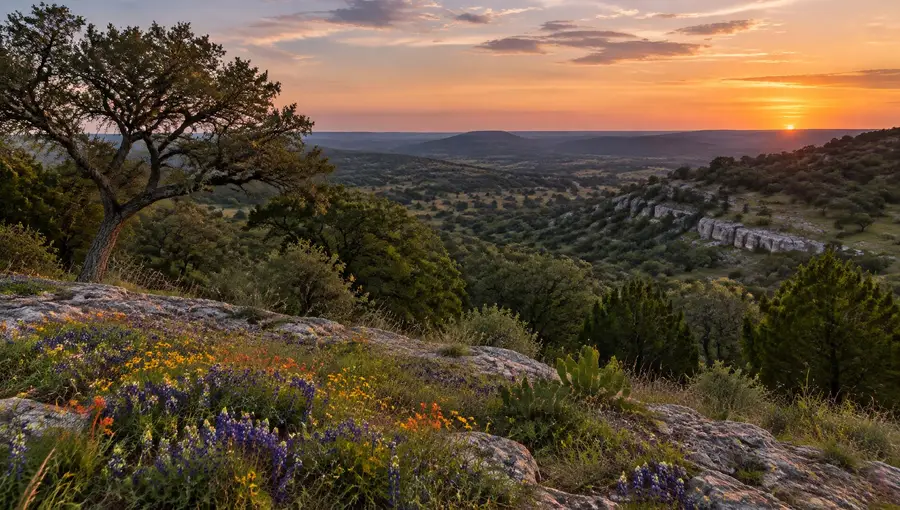
Our office is on Clair Street in Killeen. Most of our projects are within a 30-minute drive, which keeps travel costs off your invoice and lets us check on new plantings without making a day of it.
| Monday | 8:00 am – 6:00 pm |
| Tuesday | 8:00 am – 6:00 pm |
| Wednesday | 8:00 am – 6:00 pm |
| Thursday | 8:00 am – 6:00 pm |
| Friday | 8:00 am – 6:00 pm |
| Saturday | 9:00 am – 2:00 pm |
| Sunday | Closed |
Site visits are by appointment. Call 254-628-1438 or email partners@nadarmahamai.com.
They don't have to. Most of the "messy" reputation comes from beds with no edges and no plan. We use clean borders, repeated plants and a few evergreen anchors so the garden reads as intentional all year, including in winter.
It depends mostly on size, how much turf has to come out, and how much stone is involved. After a site visit you get a written, itemized estimate within five business days, so there's no guessing. Our design plans start at $650 and site visits are $95.
Yes, for the first year while roots get established. After that, most of the plants we use get by on rainfall plus an occasional deep soak during long dry spells in July and August.
Often. We can prepare a plan sheet and plant list formatted for HOA architectural review, and we'll adjust the design if the committee asks for changes.
Killeen, Harker Heights, Nolanville, Copperas Cove, Belton, Temple, Salado and Kempner, generally within about 30 miles of Killeen. Farther out, ask us. We take some projects case by case.
Tell us a little about your yard. We'll call you back within one business day to set up a site visit.